
LLAGUT BENIFALLET
Benifallet is a town on the banks of a river that opens paths and creates links
Discover the captivating power of the Ebro River
The Ebro, the great trade and communication corridor, has been a vital artery that has enriched the territory throughout history. From the Iberian societies to the Romans, this majestic river has boosted the economy and culture of its banks, benefiting not only the leaders but also all the inhabitants.
This river has always been a gateway to the peninsula, with fertile lands that became the basis of the organization of the rearguard. Despite this, it did not manage to completely unite the territories occupied by various tribes such as the Cantabrians, Autrigons, Varduls, Berons, Basques, Ilergets, Edetans and Ilercavons, which explains the great historical, political and social differences between the areas through which it flows the Ebro, from its source in Cantabria to its mouth in the Delta.
Imagine the fearsome Vikings sailing upriver to devastate Pamplona in the 9th century, or the Muslim skiffs and sloops of the Marca Superior of al-Andalus traversing its waters. King Alfonso I El Batallador also used this river to reconquer the Baix Ebro, and the first monarchs of the Crown of Aragon traveled through its waters. The Ebro even witnessed the first river toll in Europe during the first years of the Christian reconquest, a tribute for all the merchants who transported goods along the river.
Over the years, the Ebro has been a path full of life, with river navigators, fishermen, transporters, fishermen and plasterers. In the 20th century, engineers, financiers and visionaries dreamed of turning the Ebro into the great shipping route between the Mediterranean and the Cantabrian, and many canalization and navigation projects saw the light of day, such as steam navigation from the sea to in Escatrón and Sástago (Zaragoza).
Although these great works did not have the expected success, traditional sailing continued. In the waters of the Ebro, the beautiful llaguts sailed, laden with wheat, wine, plaster or coal on their way to the sea, while the Catalan rayers went downriver. The Ebro has not only connected territories, but has also united people through music and art, as demonstrated by the Jota, which resonates from Navarre to the Ebran lands, the craftsmanship of the Llaguts, clothing or many gastronomic recipes.
The modernization of transport with the railway and the improvement of roads, together with the construction of large reservoirs such as those of Mequinensa and Riba-roja, put an end to this millennial tradition. But today, we have the obligation to remember, claim and recover this legacy for future generations, keeping alive the identity that defines us.
History
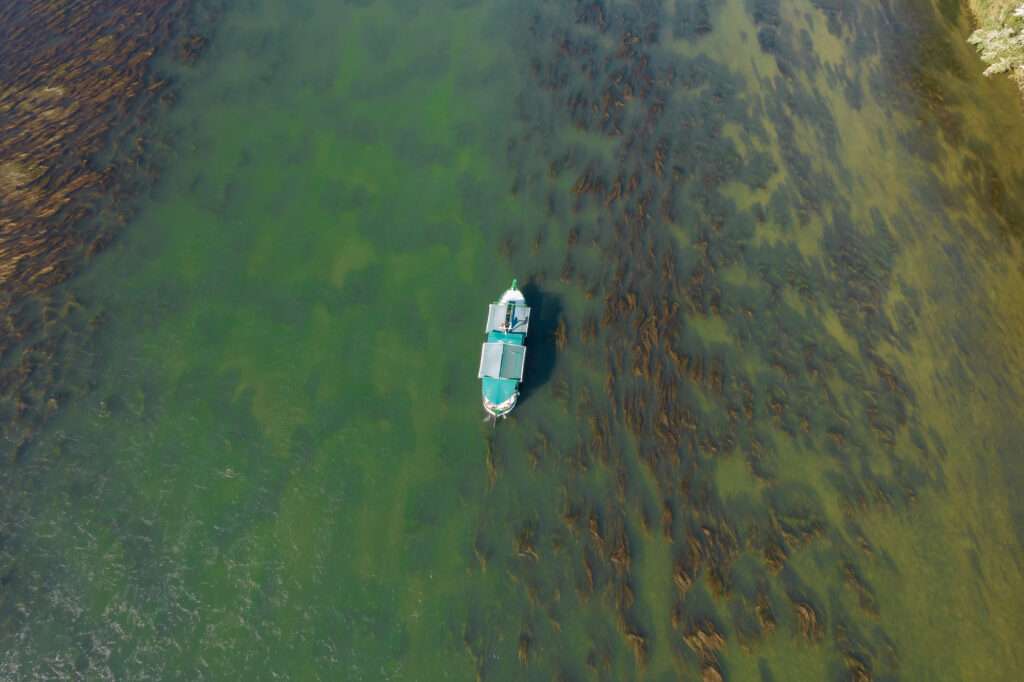
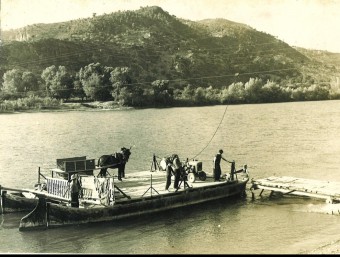
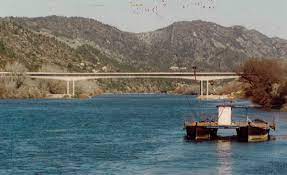
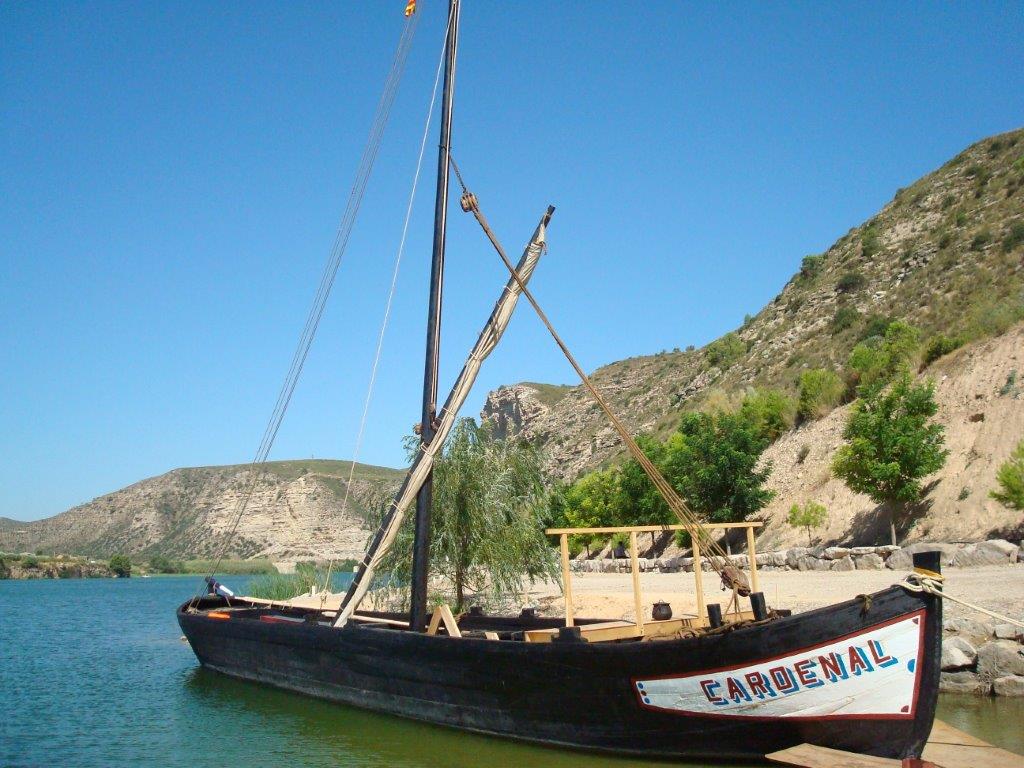
The llaguts were the last fluvial transports of goods. They were the direct result of a slow evolution from the Roman skiff, passing through medieval wood, taking the most appropriate of each. Their presence in the Ebro was numerous until the appearance of faster means of road transport. Once loaded, the maccho was raised and lowered with a stroke of the oar and with the help of the current of the river. Its crew consisted of a skipper, two laborers and the "young-guy". It was common to see llaguts loaded with wine or carobs from Benifallet, ceramics from Miravet or coal from Mequinença. For its construction, fir wood was brought down from the Pyrenees for the simple, but important, reason that it did not have knots and made it easier to work with caulking. The development and improvement of the land transport network, and the construction of the Riba-roja and Mequinensa reservoirs, led to the definitive disappearance of commercial river navigation at the end of the 1960s. Benifallet, however, maintained a passage boat until 1991.




The current Llagut Benifallet tries to be a replica of these ancient llaguts that passed through the Ebro for so many years. It has a capacity of 47 passengers and has a regular route upstream to the crossing of the counties of Baix Ebre, Terra Alta and Ribera d’Ebre, of one hour, although it also offers trips to Castellot de la Roca Roja jetty and up to Miravet (check the requirements).
Its dimensions are 15m long and 3.5m long. It has been designed by naval engineers from the company Proname and built in a workshop in Móra la Nova.
Old ferry
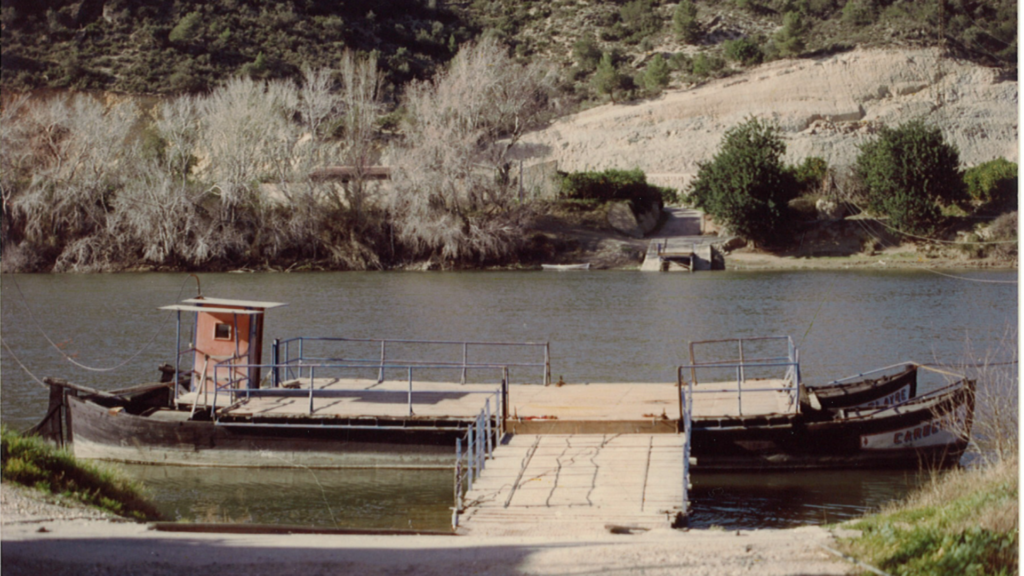
Walking along the banks of the river, from Parc de les Moreres, you reach what used to be the old ferry for the barge which the people of Benifallet used to cross the river to go work the lands beyond, go to work in the mines of El Pinell de Brai or look for the train at the old Val de Zafán station.
This unique structure consisted of a floating platform anchored to a transverse cable that connected both banks.
The barge was kept stable thanks to a system of pulleys that moved along a sturdy rope, traditionally made of hemp or pita. The barge had an expert boatman in river navigation, the llaguter, dedicated to his task from dawn to dusk. Although regular users often cooperated, it was the boatman who was responsible for securing the barge to the piers, or ‘bridges’, which had an adjustable chain mechanism to adapt to variations in water level. water
The structure of the jetty was designed with two hooks at the end that touched the river, where the barge was held with ropes or chains. The boats, consisting of two 25- to 35-ton sloops, were arranged in parallel, separated by about three meters, and on them rested a square wooden platform, built of planks joined by iron railings, which was finally firmly anchored next to the lakes.
Tribute to the footsteps of Barca de l'Ebre
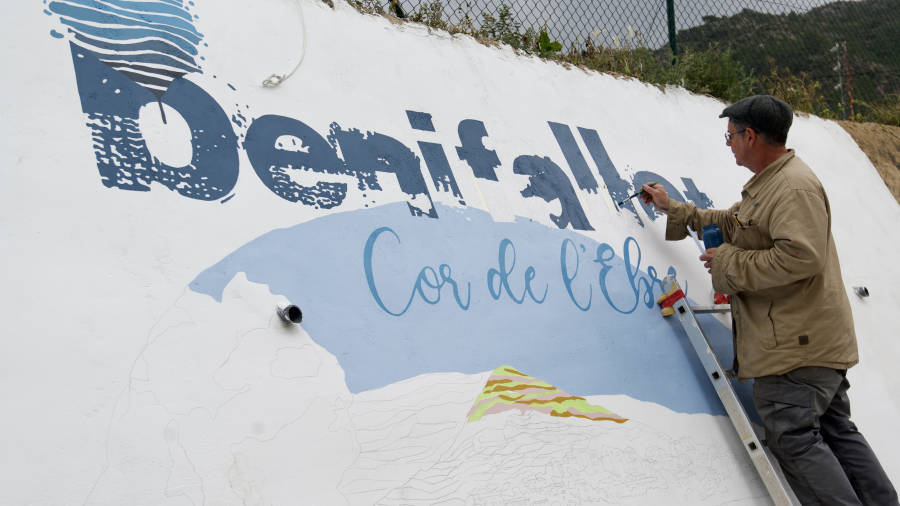
Remembering the past and honoring our history with this mural by the English artist Paul Curtis, better known as Moose and internationally recognized for his Reverse Graffiti technique, at the old Benifallet jetty.
This place was vital to our economy and daily life until the Pont del Llaguter was built in 1991.
Now, we relive those moments and create wealth in our town through tourism. Come to discover our heritage.
Scan the QR that you will find next to the mural to access all the information about the different boat crossings that have taken place in the southern section of the Ebro.
Clients opinion
"The walk with Llagut de Benifallet was an unforgettable experience. The tranquility of the river and the beauty of the landscape captivated me from the first moment. The guide was very knowledgeable about the history and nature of the area, which it greatly enriched the visit. Ideal for families and nature lovers!"
"I was impressed with the quality of the service and the friendliness of the staff. The walk with the Llagut is a great way to discover the charms of the Ebro River and its surroundings. The explanations about the local flora and fauna were very interesting and didactic. I definitely recommend it to everyone!"
"As a lover of outdoor activities, the Llagut de Benifallet fulfilled all my expectations. The views are spectacular and the walk is very relaxing. In addition, the history of the old Llaguts and their importance for the area is fascinating. A perfect plan to disconnect and enjoy nature."
"I went with a group of friends and we had a great time. The walk with the Llagut is very pleasant and the landscape is beautiful. The guide was very nice and told us many curiosities that we did not know. We were also lucky to see different water birds. A highly recommended experience for everyone!"
Benifallet Tourism Office
Av. Lluís Companys, 6 – Benifallet
SCHEDULE
- LOW SEASON | From Monday to Friday, from 9 am to 2 pm.
- MIDDLE SEASON (Easter until Saint John) | From Monday to Friday, from 9 am to 2 pm. and weekends and holidays, 10 a.m. to 1:30 p.m. and 3:30 p.m. to 6:30 p.m.
- HIGH SEASON (June – September) | From Monday to Sunday, from 10 a.m. to 1:30 p.m. and from 3:30 p.m. to 6:30 p.m.