
From 6,50€
/per person
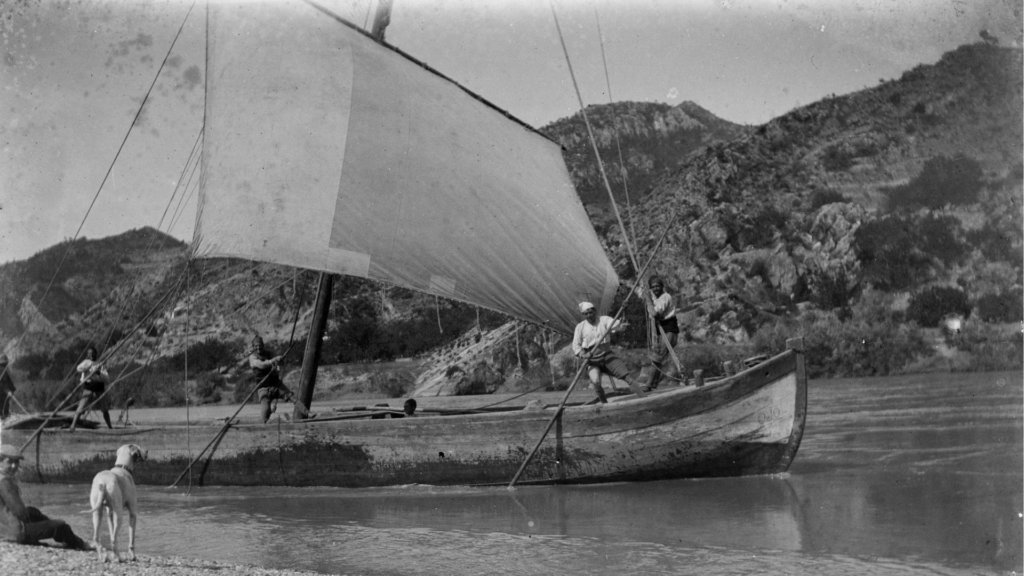
The most used system to go up the river is that of the sirga. The skipper, located at the stern, holds the rope called the reed or rope which, passing through the upper end of the mast, ends with the tug. A lot of mast height is needed to clear the reeds, riparian trees and other obstacles that come between the tow path and the boat. In addition, a large length of rope is needed to pass through the many places where the bottom of the river forces you to pass through points very distant from the bank where the path is laid out. " When the tug is done with men, each one receives a special name: the one in front, called daliner, helps himself with a stick called dalin and protects his shoulder with wooden shoulder pads. In the event that there are two draggers, the second is called rerassaguer or zaguero; when there are more, the third is called a donkey knot, and more than four tugs have never been recorded. When a mule is used, it needs one to two men to take care of it. It is hard work because of the bad roads and the reeds or bushes that populate the banks ” (Carreras Candi, 1993:317). Francesc Cost explains in his book Benifallet between two centuries that " in order to be able to tow, one of the essential things that existed was that, along the river and on the edge of the bank itself, a footpath had to be respected along which those doing the tow passed, whether they were people or they were animals The owners of the lands could not put any impediment or obstacle in it, and the loggers took care, for the sake of it, to keep it clean .” The trip upriver required the towing of ligutes. Therefore, as we have explained, a sledgehammer, and in earlier times the tugs, pulled the rope along the towpath. " The sloop held on by the gunwale, but to make it move forward when there was not enough current, so that she could do it alone thanks to the position of the rudder, there were long wooden bars with an iron point at the end so that she could not spent: then, the men of the best will took them, one in front and one behind; since there was no law to indicate who should take them, there was always someone alive trying to escape” (Francesc Cots, Benifallet between two centuries).
The Pont del Llaguter is an emblematic structure that put an end to the Benifallet ferry crossing. Its construction began on May 10, 1987, and it was inaugurated on February 23, 1991. This bridge, with a length of 231m, consists of three arches and is elegantly designed in a curved shape. However, if we walk to the end of this bridge, we will find the Llaguter Monument. This work, painted by Clari, is a tribute to the work and effort of the last navigators of the Ebro. It represents the memory of a time when the llaguts traveled along the river transporting goods and people. The Monument to the Llaguter is a living reminder of the historical importance of these boats in the fluvial life of the region.
A getaway to Benifallet is a unique opportunity to connect with nature and the history of our town. Come and enjoy everything that Terres de l'Ebre has to offer.