DAYS OF HISTORICAL MEMORY

BENIFALLET DURING THE CIVIL WAR

Republican Sentinel over the Barrufemes Pass

From April 19, 1938, the Ebro River became the front line between the two sides of the Spanish Civil War. The People’s Army of the Republic occupied the left bank, while the Francoist Army occupied the right bank. The Autonomous Group of the Ebro, later known as the Army of the Ebro, fortified its front line by building trenches parallel to the river. In the months that followed, both sides attacked each other with rifle fire and artillery.

From April 1938, with the war front stabilized on the Ebro River, the town of Benifallet was completely evacuated. The parts of Costumà, Marelles and Fontelles, along with the spa of Cardó, became the main evacuation sites for civilians. These civilians went down to the village or to the agricultural estates near the river to look for food. In the village, they looked for clothes and food such as oil, which was stored in their homes.

On July 25, 1938, at dawn, the 10th Mixed Brigade of the 46th Republican Division crossed the Ebro at the mouth of the Canaletes River, starting the Ebro Offensive, which would later be known as the battle of the Ebro.

Trench lines

COLL DE SOM TRENCH LINE. The trench, approximately 200 meters long and 50 centimeters wide in some areas, has a variable depth of between one meter and one and a half meters. Stone parapets can be seen in several parts. This trench was accidentally discovered in 2017 by the Mossos d’Esquadra, alerted to the presence of an explosive device in the area. The artifact was found near the Ebre River, on the other side of the La Xalamera estate, where other artifacts had previously been located, according to the police report.

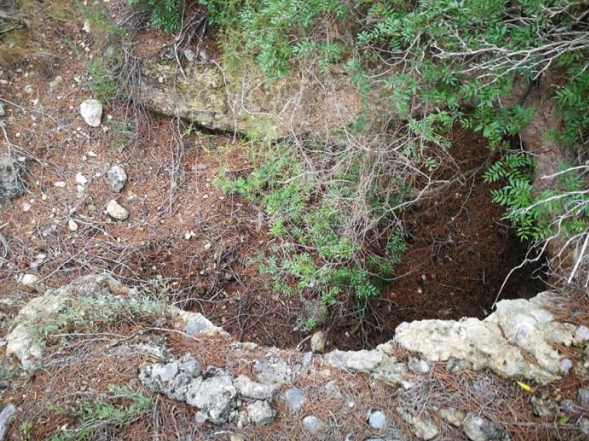
BUICS TRENCHES. The trench line located on the ridge of the Buics hill offers a privileged view over the mouth of the Canaletes river. Although some sections are ambushed or obscured, a well-preserved section remains with an access gallery dug into the ground, a trench parallel to the river, a rifle pit and a shelter for resting. This position provides a direct view of the Ebro River and the village of Benifallet.

Trench of Buics

ORIGIN OF THE JOURNALS

In October 2002, Benifallet devoted himself to paying tribute to his sons, Francisco Margalef Treig, Antonio Povill Trilla, Tomàs Salaet Artiola and Joaquín Cid Pasanau, deported to Nazi camps. He did it as part of the 1st Days of Historical Memory, the result of the work carried out by the team that continues to carry forward the Stolpersteine project of the Benifallet Town Council formed by Mireia Margalef, Sílvia Folqué, Amparo Treig, Gemma Vidiella, Assutzena Povill, Nanu Marino and Hélene Marino. In Mauthausen, the Benifalente residents Antoni Povill Trilla and Tomàs Salaet Artiola, who were released, and Francisco Margalef Treig, who was killed in Gusen (a sub-camp near Mauthausen) on July 11, experienced the horror of this camp of 1942. In the concentration camp of Aurigny, Joaquim Cid from Benifalte suffered deportation, released in 1944. The tribute had as a central element the research work of Mireia Margalef Castillo at the institute of Roquetes which she deserved the Honorable Mention of the Democratic Memorial. An excellent work that has become the second book published by Amics i Amigues de l'Ebre in the "Ebrencs als campos de concentration" collection. The Benifallet City Council approved, at the plenary session of November 13, 2020, to request its incorporation into the Stolpersteine project of the Democratic Memorial of Catalonia which incorporated the request to receive the four cobblestones in memory of the four deportees, cobblestones that made by the German artist Gunter Demnig. The City Council is waiting for the Generalitat to receive them and their placement can be made effective

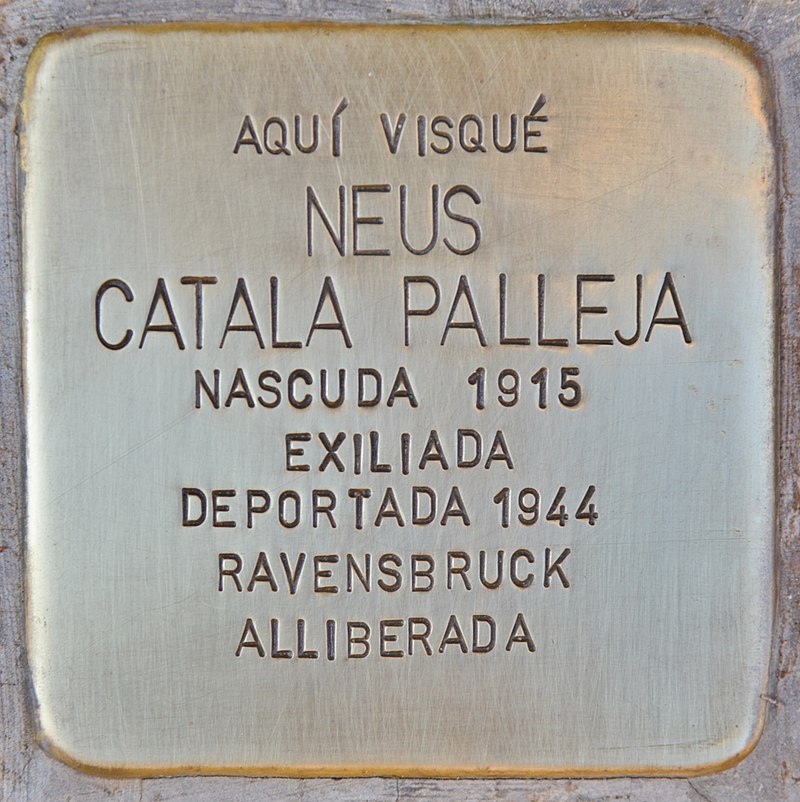
Stolpersteine

The Stolpersteine de Benifallet team is made up of Mireia Margalef, Sílvia Folqué, Amparo Treig, Gemma Vidiella, Assutzena Povill, Nanu Marino and Hélene Marino. A Stolpersteine, also known as a "stepping stone" or "stumbling stone", is a small memorial placed in the pavement near the last place of residence or work of a Holocaust victim . These stones, created by the German ceramist Gunter Demnig, are engraved with the names and dates of birth and death of people who were persecuted and killed by the Nazi regime. This initiative seeks to keep alive the memory of those who suffered and remember their individual stories. ️

Would you like to receive information about upcoming conferences?

If you want us to notify you by email when we have information about the next historical memory conferences, sign up and you will receive all the news on the subject

inscription
Previous editions:
If you come to the conference, you are interested in knowing:

The essentials of Benifallet

A getaway to Benifallet is a unique opportunity to connect with nature and the history of our town. Come and enjoy everything that Terres de l'Ebre has to offer.

From 6,50€

/persona
45 minuts

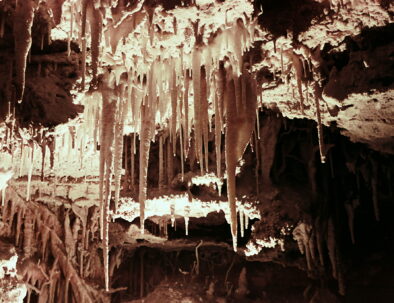
Discover the Coves of Benifallet

Come and explore this set of impressive karst formations. The Coves Meravelles and the Cova del Dos are open to the public and can be visited on a guided basis, lasting about 45 minutes.

From 7,50€

/persona
1 hour

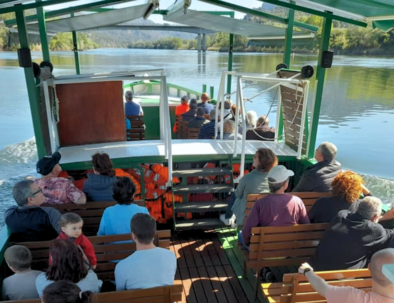
Sail along the Ebro with Llagut Benifallet

This replica of ancient lakes transports you across the waters, offering a unique view of the region. The trips are always guided and last about an hour.

15€

/infant
Childish | Adults

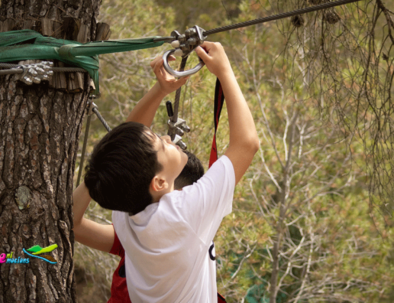
Live the adventure in Beniemocions theme park

Come and overcome fun challenges between trees, bridges, ziplines, nets and mazes. Both young and old will enjoy a real adventure in the middle of nature.
Do you want more?
Benifallet Tourism Office

Av. Lluís Companys, 6 – Benifallet

Tel. 977 462 334

SCHEDULE
  • LOW SEASON | From Monday to Friday, from 9 am to 2 pm.
  • MIDDLE SEASON (Easter until Saint John) | From Monday to Friday, from 9 am to 2 pm. and weekends and holidays, 10 a.m. to 1:30 p.m. and 3:30 p.m. to 6:30 p.m.
  • HIGH SEASON (June – September) | From Monday to Sunday, from 10 a.m. to 1:30 p.m. and from 3:30 p.m. to 6:30 p.m.
Privacy Overview

This website uses cookies so that we can provide you with the best user experience possible. Cookie information is stored in your browser and performs functions such as recognising you when you return to our website and helping our team to understand which sections of the website you find most interesting and useful.