From 6,50€
/persona
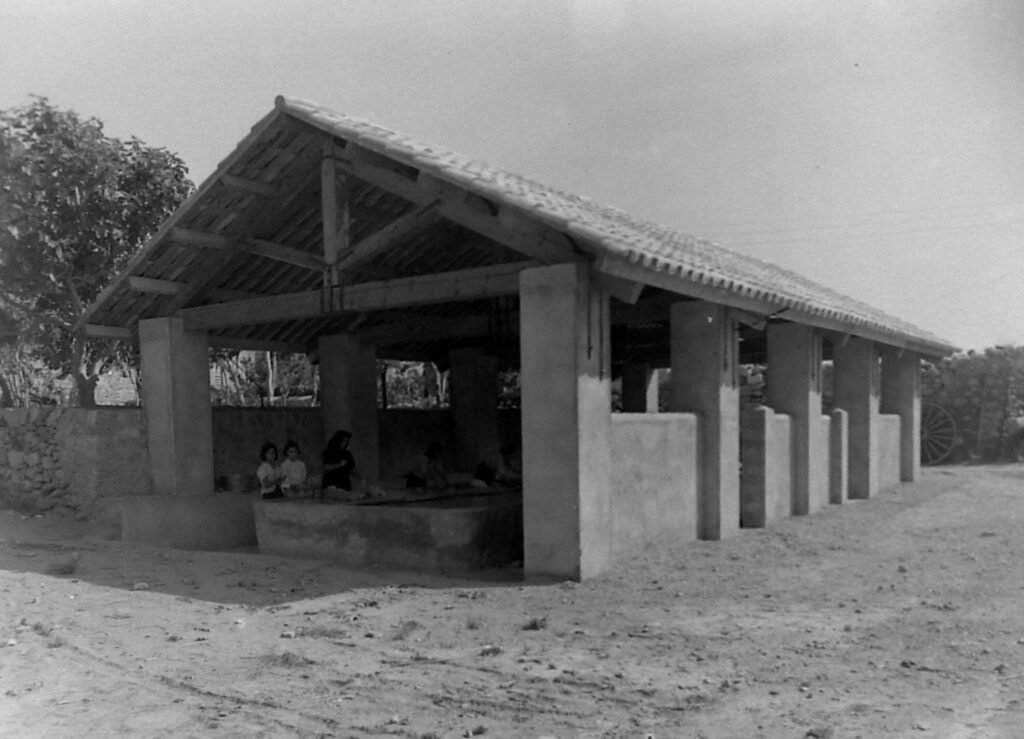
The Benifallet laundry was one of the works carried out in the locality within the National Service for Devastated Regions created in 1938 during the Dictatorship of General Franco to rebuild the "liberated" areas that had suffered the most damage from the bombings. On September 23, 1939, the "Law of Adoptions" was passed, which provided for the assumption by the State of the reconstruction tasks of certain towns chosen according to the degree of destruction achieved. On October 7, the Ministerial Order was approved that deployed the Law and that regulated the corresponding procedures and on October 21 of the same year, the first list of towns "adopted by the Caudillo" was approved by Decree, among the that there were three of those affected by the Battle of the Ebro: Móra d'Ebre, Pinell de Brai and Tortosa. In 1939 itself, by decree of 29 October, Perelló and l'Ampolla were included; and, by decree of December 15, Benifallet and Corbera d'Ebre. One more corresponded to the following year: La Fatarella, by decree of March 9, 1940. The last two are from 1941: March 12, Benissanet; and on August 10, 1941, Gandesa, which was the latest. The labor force that Regiones Devastadas used was made up of workers hired by the locality itself; Republicans sentenced to forced labor by military courts and compulsory personal service for men between 18 and 55 years old at the rate of one day a month or paying the equivalent in money.
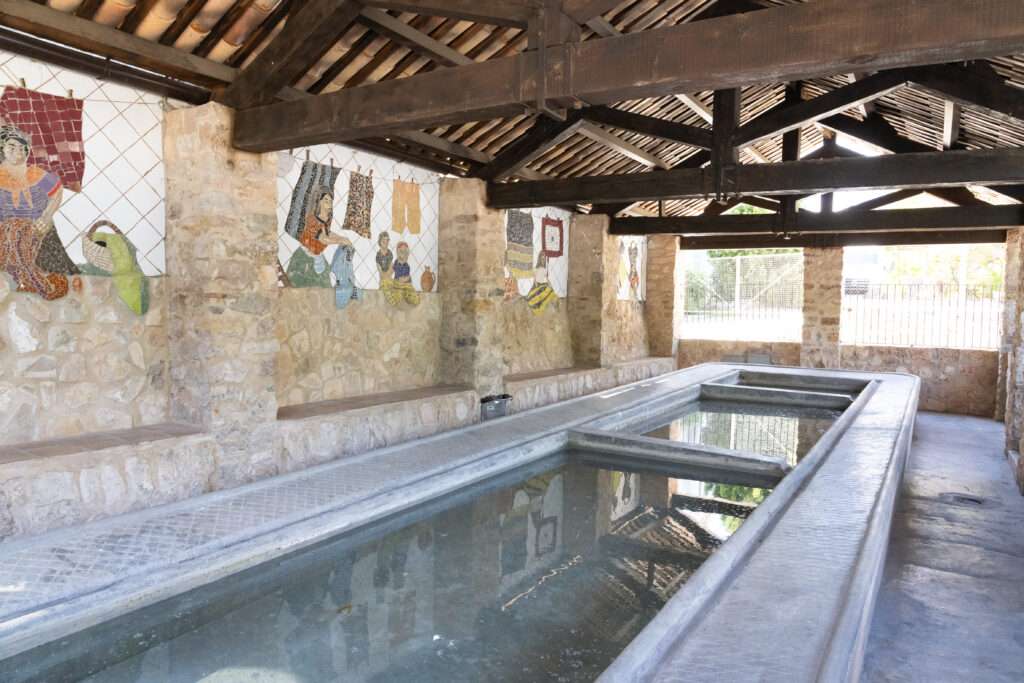
The washing machines are located at the confluence of Dr. Sastre, Alfons and the Parc de les Moreres, on the promenade of the river and clothes were washed there until well into the 20th century. The Benifallet laundry building is made up of a single volume on the ground floor. Its floor plan is rectangular with a longitudinal gable roof. The vertical structure is formed by masonry pillars and the horizontal structure by wooden horses arranged in four crugies. The masonry wall enclosures between the pillars constitute a half-height barrier that allows continuous lighting and ventilation of the washers. Also unique is the structure of the horses on the roof and the system of joisting and support of the tiles. They are made up of three contiguous laundry rooms connected to each other by overflows to facilitate the processes of cleaning and going over the clothes, and in the perimeter of which is the cleaning surface sloping towards the pools. Each municipality had its washing machine, which was an important advance due to the great improvement that meant for the public health of the town the step from cleaning clothes on the banks of the river to doing it in a specific building. Ethnographically, it is necessary to verify the historical function of the washers as a meeting point, exchange, communication and coexistence between the women of the village. To the extent that the term "doing laundry" comes to have a double meaning, signifying in addition to the washermen's own action of chattering and gossiping while washing clothes. Finally, the culture of the use of water, which we seem to value again, can be seen very well in these constructions in terms of the use and reuse of water. The use of water of natural origin to do community laundry, then made it possible to use it to irrigate the nearby gardens. In 2012, the artist Amanda Corominas made a mosaic to commemorate this tradition (photo below), bringing it to life in the same spirit as it was done at the beginning of the last century, with women as protagonists washing clothes. You can visit his art gallery on Carrer Ermita.
A getaway to Benifallet is a unique opportunity to connect with nature and the history of our town. Come and enjoy everything that Terres de l'Ebre has to offer.